Student Testimonials

Julee, Biotechnology, Level 4
Julee, Biotechnology, Level 4“When you get into the job market, a lot of people are going to graduate with the same degree. We’re all going to the same school, we’re all going to gain the same skills and on paper we’ll look the same! But we need a personality to go with it, and getting involved in clubs and teams teaches us the soft skills that other people might not have.”

Angel, Automation Systems Engineering Technology, Level 3
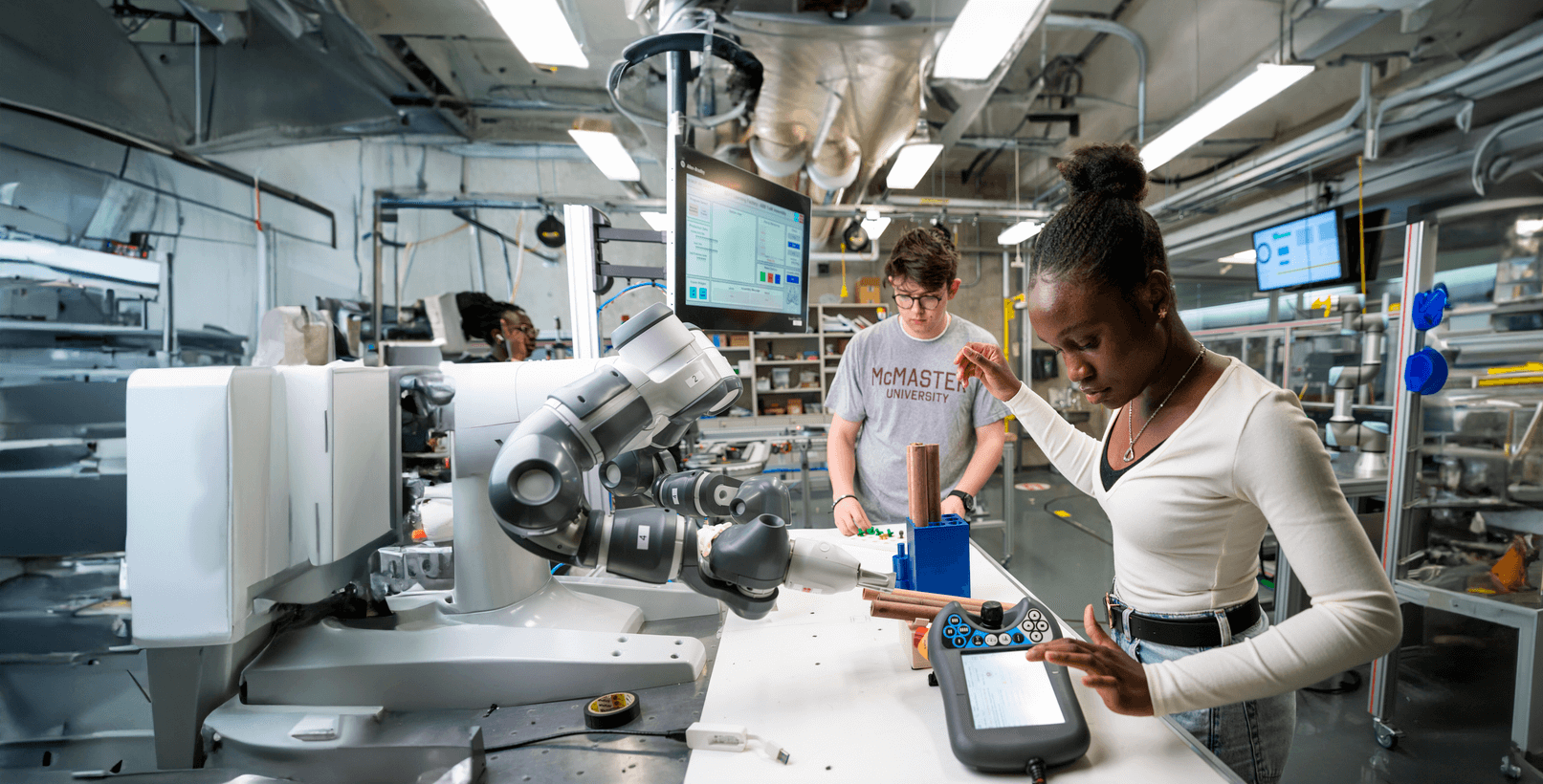
Angel, Automation Systems Engineering Technology, Level 3“The part that I love the most about the B.Tech program is the amount of hands-on experience we gain. Not only do I get to practice and understand the theory I have learned in class, I also get a chance to enhance my personal growth.”
Angel, Automation Systems Engineering Technology, Level 3Faculty of EngineeringYour Classes
What you’ll take:
Automation Systems Engineering Technology I Co-op stream:
- Chemistry (ENGTECH 1CH3)
- Python Programming (ENGTECH 1PP3)
- Electricity and Electronics I (ENGTECH 1EL3)
- Mathematics I (ENGTECH 1MC3)
- Mathematics II (ENGTECH 1MT3)
- Physics (ENGTECH 1PH3)
- Foundations of Business (GENTECH 1BZ3)
- Professional Communications (GENTECH 1PC3)
- Analytical Chemistry (ENGTECH 1AC3)
- Object-Oriented Programming (ENGTECH 1PR3)
- Introduction to Health and Safety (WHMIS 1A00)
Automotive and Vehicle Engineering Technology I Co-Op stream:
- Chemistry (ENGTECH 1CH3)
- Python Programming (ENGTECH 1PP3)
- Electricity and Electronics I (ENGTECH 1EL3)
- Mathematics I (ENGTECH 1MC3)
- Mathematics II (ENGTECH 1MT3)
- Physics (ENGTECH 1PH3)
- Foundations of Business (GENTECH 1BZ3)
- Professional Communications (GENTECH 1PC3)
- Statics and Mechanics of Materials (ENGTECH 1ME3)
- Object-Oriented Programming (ENGTECH 1PR3)
- Introduction to Health and Safety (WHMIS 1A00)
Biotechnology I Co-Op stream:
- Chemistry (ENGTECH 1CH3)
- Python Programming (ENGTECH 1PP3)
- Electricity and Electronics I (ENGTECH 1EL3)
- Mathematics I (ENGTECH 1MC3)
- Mathematics II (ENGTECH 1MT3)
- Physics (ENGTECH 1PH3)
- Foundations of Business (GENTECH 1BZ3)
- Professional Communications (GENTECH 1PC3)
- Analytical Chemistry (ENGTECH 1AC3)
- Biology (ENGTECH 1B13)
- Introduction to Health and Safety (WHMIS 1A00)
Learn more about your B. Tech. I requirements here.
AUTOMATION SYSTEMS ENGINEERING TECHNOLOGY
The Automation Systems Engineering Technology program prepares students to build complex electronic systems that create solutions to everyday problems. By teaching skills from the fields of chemical, mechanical, electrical, and computer engineering, graduates can easily transition between industries. From robotics to food processing-wherever you might find an automatic system that uses sensors, instruments, actuators, and networks-you will find a role suitable for a skilled automation specialist.
Where will you go?
- Use hardware and software to design and implement automation systems to improve the efficiency of plants and labs in industries such as petrochemicals, power generation, pharmaceuticals and primary steel
- Design control systems and assembly lines
- Develop and program robotic applications
- Advise on safety policies and procedures for automated technologies
Top co-op employers
- RBC
- Linamar Corporation
- PepsiCo
- Advanced MicroDevices
Did you know?
The Automation Systems Engineering Technology program has developed a Smart Systems stream option for students. New courses in the field of Smart Engineering Technology have been introduced, including cloud computing, internet of things, artificial intelligence, machine learning, embedded systems, smart health systems, and smart cities.
AUTOMOTIVE & VEHICLE ENGINEERING TECHNOLOGY
The Automotive and Vehicle Engineering Technology program teaches students to make vehicles safer, faster, cleaner and more sustainable. Students are taught with a systems perspective blending various engineering disciplines, such as mechanical, electrical, computer science, mechatronics and materials. Students develop hands-on skills on 3D CAD modelling, robot programming, controller tuning, electric/ hybrid vehicle design, vibration control, troubleshooting and manufacturing.
Where will you go?
- Develop hybrid and green vehicle technologies
- Design power and control systems, engines, and bodies
- Perform complex analysis on mechanical components, assemblies, and systems
Top co-op employers
- General Motors
- Ford
- Honda
- Magna
Did you know?
Automotive and Vehicle Engineering Technology students have exclusive access to labs in the McMaster Automotive Resource Centre (MARC), which houses industry-scale labs, classrooms and equipment to prototype the vehicles of the future and research ways to make vehicles better, cleaner and greener.
BIOTECHNOLOGY
Biotechnology is an interdisciplinary field merging life science, applied science, and engineering. Study genetic engineering; cell biology, molecular biology, and microbiology; analytical instrumentation; and, bioprocessing. Students learn about the latest research in immunology, virology, genomics, proteomics, and bioinformatics. With the combination of theoretical foundation and lab experience, you will be prepared for success in areas in genetic engineering and bioprocessing.
Where will you go?
- Work in bio-fuel, food, and pharmaceutical industries
- Monitoring quality control and assurance of biomaterials and bioproducts
- Work in bioinformatics, genetic and protein engineering, nanobiotechnology, and bioremediation
Top co-op employers
- Estée Lauder
- Roche
- Sanofi Pasteur
- Bunge
Did you know?
Biotechnology students are the only undergraduate students at McMaster University that have access to a Level II Biosafety lab. Students complete a capstone project in their final year on leading-edge research in the biotechnology field, including projects that look at the efficacy of pharmaceuticals.